


New Research Study

The State of Retail Workers’ Personal Finances

What Retail Employers Need To Know Right Now

Despite a steady decline in inflation over the last year, a new survey has revealed that American retail workers are still feeling the negative impact of a fluctuating economy. And that negative impact is being felt not only by the employees but also by the employer.

The new study from Talker, commissioned by DailyPay, reveals that over a quarter (28%) of retail workers surveyed say their financial health is worse than it was a year ago, while one in five (23%) say their ability to pay bills has gotten worse in the past year.

Get full access to ‘The State of Retail Workers’ Personal Finances’ survey research

28%

of retail workers surveyed say their financial health is worse than it was a year ago

In fact, a slight majority of those polled (54%) say inflation in the U.S. has become worse over the last year, despite the reality that inflation has dropped by about 30% in the past year - from +3.4% in April 2024 compared to +2.3% in April 2025.

Similarly, half (52%) of those polled rate the economy as not very good or poor, and that it’s gotten worse (50%) over the past year.

54%

say inflation in the U.S. has become worse over the last year

But from their vantage point of retail workers, the rising costs of everyday necessities feels like an insurmountable challenge, with over 3 in 4 (77%) rating the U.S. economy as decent at best.

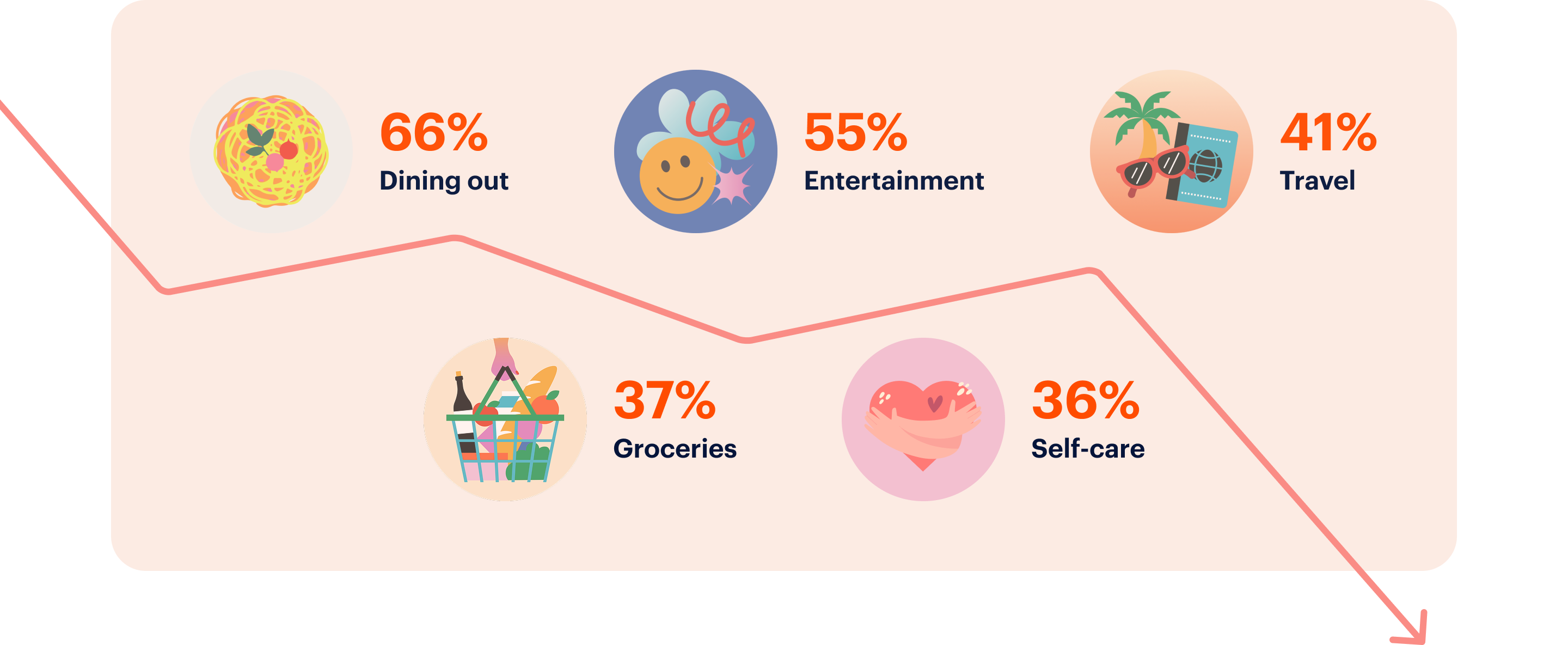
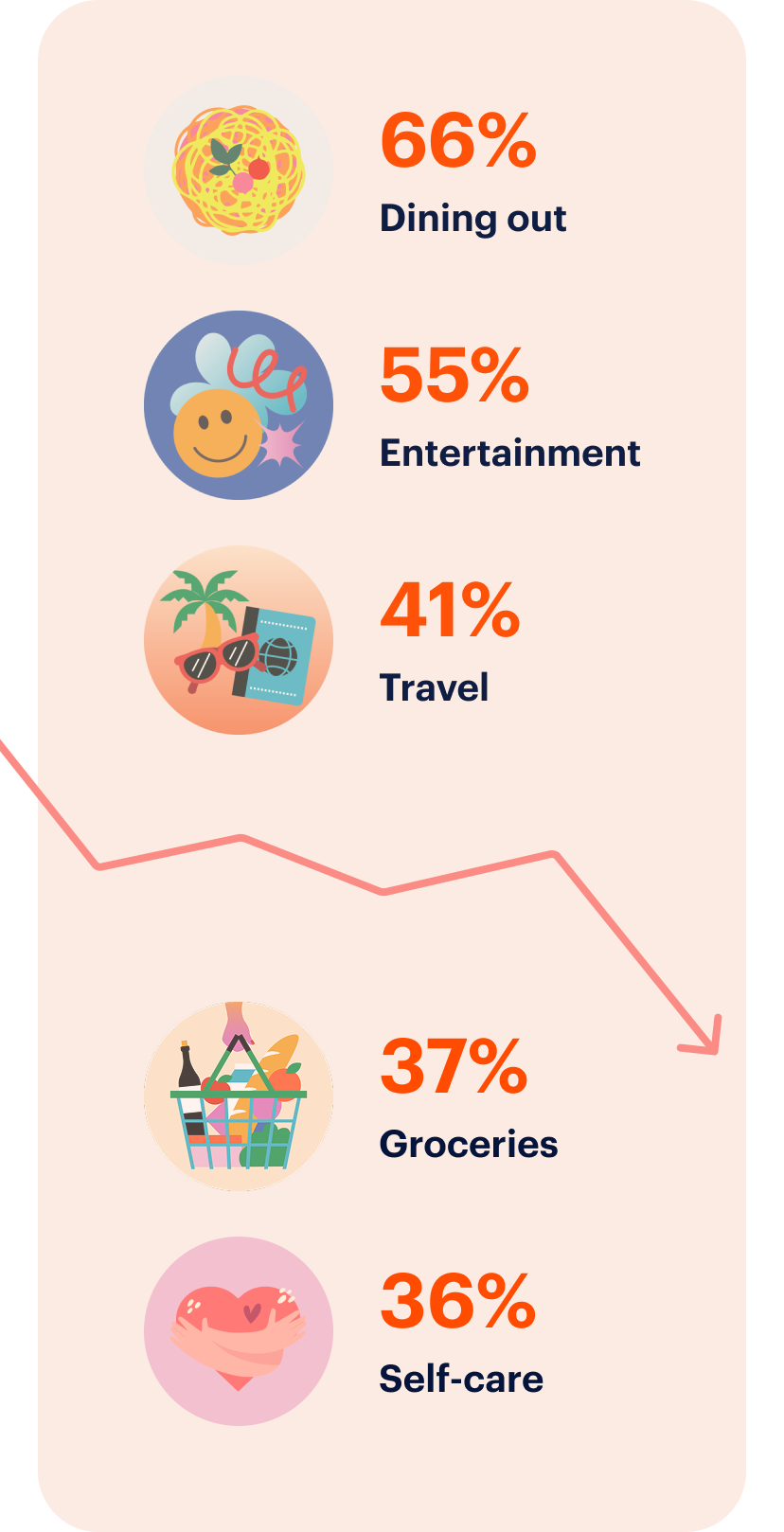
As a result, retail workers feel the tremendous pressure to make ends meet and recognize the negative impact this financial stress is having on their lives. Nearly two-thirds (65%) of retail workers report overdrafting an account, with two in five (39%) having overdrafted their account within the last month, and 17% resorting to taking out a loan within the last year to make ends meet. To reduce expenses, over 2 in 5 (42%) are skipping social activities and having to curtail spending to avoid falling into a seemingly never-ending cycle of debt. Among the areas they admit to reducing their spending on include:

As expected, this stress permeates into their work lives as well. About 41% are looking for a new job, while about 1 in 4 (26%) are calling out of work.

Many have to resort to taking a gig job on the side such as driving a rideshare or delivering food to get access to their pay that day, so they can pay a bill to avoid exorbitant late fees. With over a quarter (27%) juggling multiple jobs, it’s no wonder that over a third (39%) say financial stress inhibits their ability to do their jobs well. And over 6 in 10 (63%) state that due to their work schedule changing, it is difficult to budget their finances.

Another negative byproduct of this financial stress is that retail workers are burnt out, feel less productive, and are looking to leave the industry. Over 4 in 10 (41%) say they are burnt out, 20% have even admitted to experiencing a decline in productivity, and not surprisingly, a significant amount (44%) are looking to leave retail completely.

44%

looking to leave retail completely

The problem of employee retention is certainly not acute to the retail industry alone. But according to the U.S. Bureau of Statistics, the average retail employee turnover rate in the U.S. is about 60%, ranking 4th of all industries, only behind hospitality (130%), arts and entertainment (127%), and construction (69%). With the high cost to fill those jobs, retail business owners need to find ways to retain a productive and engaged workforce.

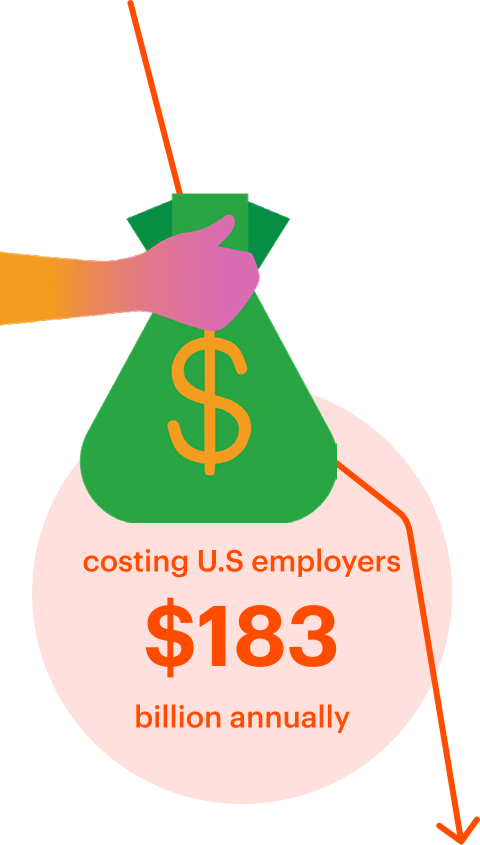
The issue of financial stress negatively impacting retail worker productivity is indicative of a larger problem with the workforce. According to data from financial wellness provider BrightPlan’s Wellness Barometer Survey, employees on average say they are losing more than seven hours of productivity each week due to financial stress, costing U.S. employers $183 billion annually.

However, these uncertain times do provide an opportunity for retail employers, in particular, to help their employees with benefits that can make a real impact in their day-to-day lives. Nearly half (44%) of those surveyed by Talker said the benefits their company provides do not meet their needs, and over 1 in 3 (35%) say they're not set up for success at their job.

The challenge for employers is to identify and implement high-impact and relevant benefits that help alleviate their employees’ financial stress while driving retention and productivity.

One such high-impact benefit is the employer-sponsored financial wellness solution of On-Demand Pay.

According to the Talker study, over 7 in 10 (72%) of retail workers who don’t already have On-Demand Pay say it would help improve their finances.

And the reasons are quite apparent. In the last year, 43% of the retail workers polled reported running out of money between paychecks, and a third (33%) experienced difficulty paying bills on time. However, On-Demand Pay empowers employees with choice and control over their earned wages, helping them pay bills on time. No longer does one need to wait for an arbitrary pay day to access their pay that they’ve already earned. The financial benefit has also proven to help companies recruit and retain a more productive and engaged workforce.

A significant number of retail workers surveyed feel that On-Demand Pay is the answer to their current financial problems. In fact, nearly four in ten (39%) said they would be able to pay for necessities when needed. Over a quarter (27%) feel On-Demand Pay would make them feel more financially secure, and the same number feel it would simply help them enjoy their life more.

It’s a win-win for both employees and employers.

Of note, research from Arizent/Employee Benefits News demonstrates the positive impact DailyPay’s On-Demand Pay solution can have for employers, many of whom are still challenged with a tight labor market. According to the study:

0%

30% of employers say they've seen a reduction in employee turnover since implementing DailyPay.

0%

42% of employers say they have seen higher satisfaction/morale since implementing DailyPay.

0%

45% of employees say they are more productive at work because of DailyPay.

0%

49% of employees say they are more motivated at work.

0%

45% of employees say they either stopped looking for a new job completely or less often.

0%

55% of employees say they pick up at least one extra shift per month.
Conclusion

There are about 18 million retail workers in the U.S. They are the backbone of one of the most critical parts of our economy. In 2024, the retail industry in the U.S. generated an estimated $7.38 trillion in sales, according to data from the US Census Bureau. This represents a significant portion of the U.S. economy, with retail sales contributing around $5.28 trillion to the GDP. With this much economic impact at stake, we can't afford to treat workforce development as an afterthought. It’s imperative that companies identify and implement strategic solutions to make sure those 18 million workers are able to bring the best version of themselves to work every day.

To learn more about how DailyPay is helping retailers reduce turnover and improve employee financial wellness, schedule time to chat.

Let's Talk

The DailyPay Solution

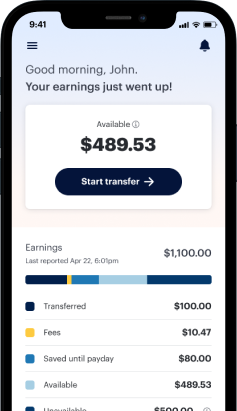
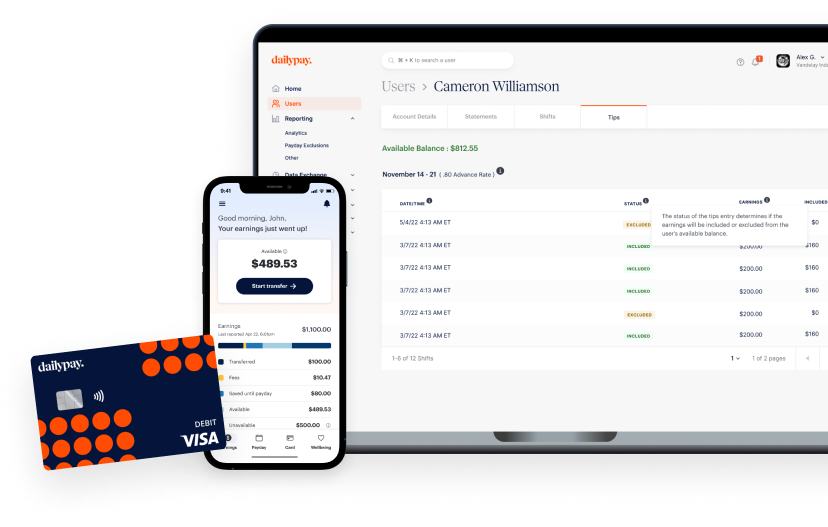
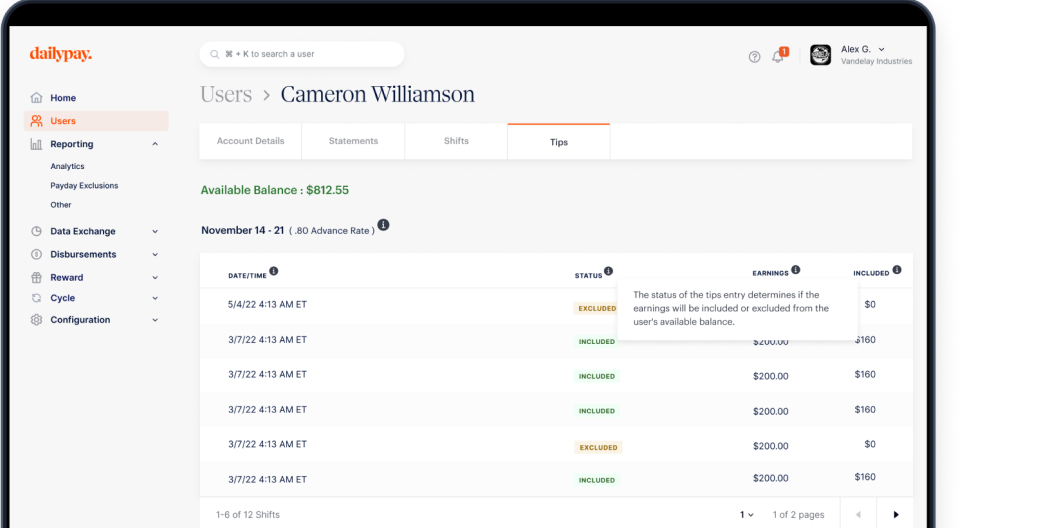
DailyPay’s On-Demand Pay Platform boosts employee financial wellness and keeps them more engaged, motivated and happier at work. For employers, this translates to improved retention and increased productivity.

dp-desktop-mockup
dp-mobile-mockup
dailypay-card-mockup

See Why Top Companies Choose DailyPay

Empowering for Employees

Greater financial control with access to 100% of their DailyPay balance to meet the challenges of unexpected financial disruptions.


Improved planning with visibility to spending and earned pay in one easy-to-use app.


No need for a pre-existing checking or savings account.

Simple and Secure for Employers

No change to payroll processes — DailyPay compliantly handles it all.


Seamless integration with HCM, payroll, banking and benefit applications.


Enterprise-grade platform that keeps data private and the service running so it's always there when your employees need it.